There is always excitement in the air when it comes time for the 4th graders to work with clay. For this piece of art we look at Claes Oldenburg and his famous food sculptures for inspiration. The students drew a sketch of their chosen food and include notes on how they will try to re-create it in clay. Once their sculpture is finished, it is fired in the kiln, painted, and displayed it the library.
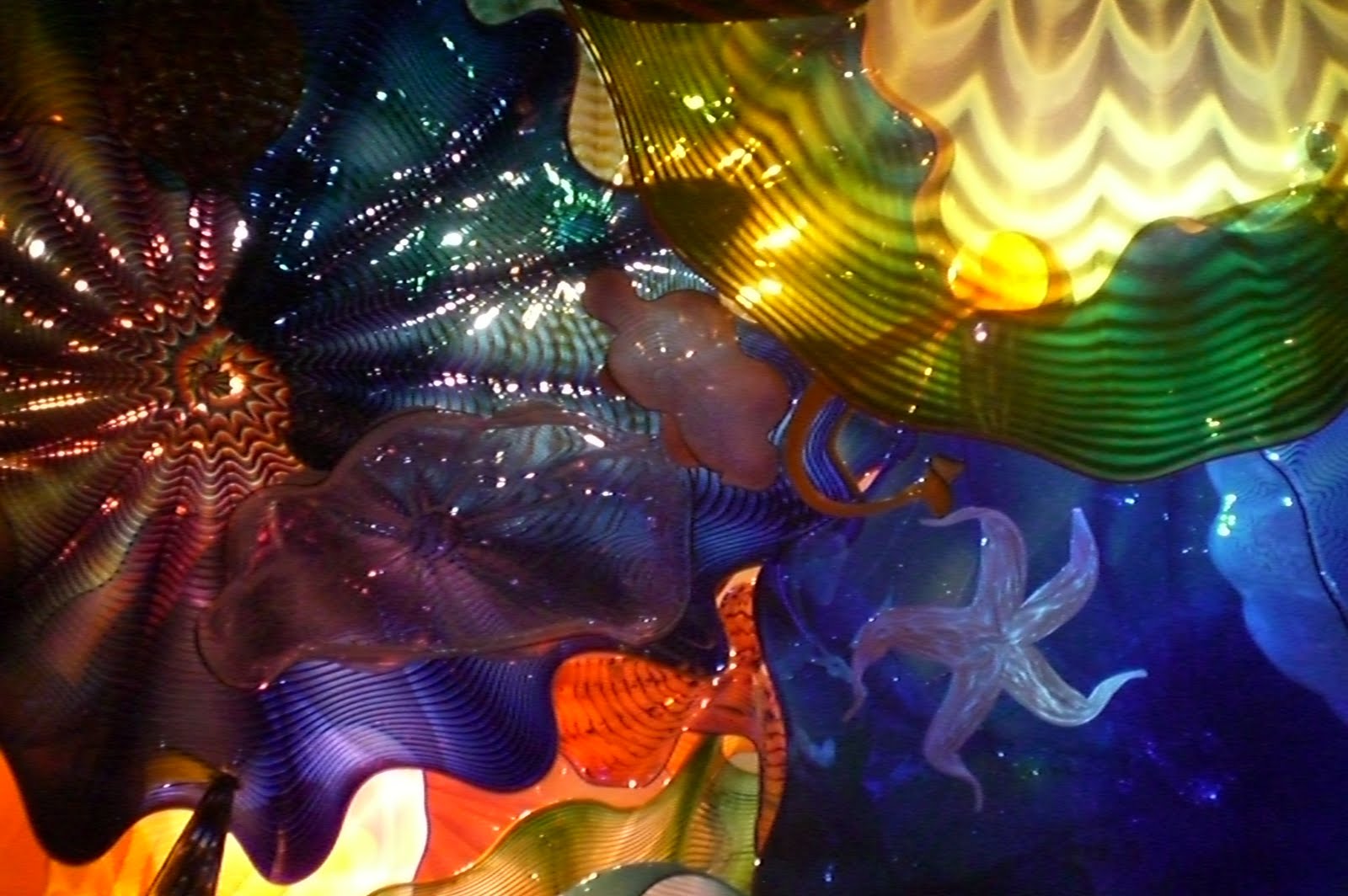
Over Spring Break I went to the MFA in Boston to see the Dale Chihuly exhibit. It was amazing! If you have the opportunity to visit the MFA, don't miss this!
April 12 and 13 is our district's annual ArtsFest, a showcase for the visual, instrumental, and choral arts.
I love that my district devotes time to let us show off all of our students' talents--they really are a very talented group. And while it is a major undertaking to pull artwork, mat, and hang it, it is so worthwhile to see it on display!
In class I read to the first grade students, Hugo and Miles in I've Painted Everything! by Scott Magoon. The book is by a local author/illustrator so it makes it even better! In the story, Hugo, the main character, has decided he has painted everything and is out of ideas as to what to paint next. His friend, Miles, suggests a trip to Paris for inspiration. The two travel all over the city, but it's not until they are at the top of the Eiffel Tower that Hugo realizes how different Paris looks from above. Hugo and Miles rush back home so Hugo can paint everything again, only differently.
I set up a still life in the art room and had the classes sketch what they saw. We talked about how if they drew only part of their fruit it would look like it was in the bowl and not resting along the edge. They outlined their drawing in Sharpie marker and then drew a diagonal or vertical line through their drawing. On one side of the line they were to color their still life using realistic colors. On the other side they were to look at their still life a little differently and add colors from their imagination. The students used oil pastels and watercolor washes in the background.
Fourth graders combined the science of motion and the art of drawing to create flip books. This lesson was to build upon the fourth grade science curriculum and to introduce the students to animation, a career in the art field.
 We watched some great video examples of flip books and the students brainstormed ideas. They planned and drew their idea on a storyboard to help show the progression of their story. They drew their storyboard pictures onto index cards. Lastly, the students designed a cover and assembled their book. Take a look at some of the examples! (Sorry about the sideways video....I'm still working on trying to edit!)
Third graders, inspired by Colonial American samplers, stitched and painted their own modern day samplers. The students viewed samplers sewn by young women in the 17th and 18th century. They learned that a sampler was like a dictionary of stitches. A fancy sampler was usually stitched with a picture and displayed with great pride in the home. After some brainstorming, the students sketched a picture then transferred their image to a piece of burlap. The image was sewn using a running stitch. They painted inside the stitched outline and included a border, their initials and the year.